A Power Plus Case Study in Startup Program Design, Training, and Mentorship
Early-stage entrepreneurs often begin with strong ideas, technical knowledge, and a desire to solve real problems. Yet the difficult question is not only how to generate an idea. The deeper challenge is how to transform that idea into a clear value proposition, a testable product, a working startup model, and a convincing presentation for users, partners, mentors, and potential investors.

As part of its work in practical entrepreneurship training and startup capacity building, Power Plus provided program design, principal training, and mentoring support for the Innovative Entrepreneurship Lab at SySSR. The program was developed for startup-building teams working on business and social startup ideas, and it guided them through a structured journey from idea development to MVP planning, product launch, product-market learning, and final startup pitching.
The second version of the program was built around the theme:
The Challenge of Freedom, Responsibility, and Innovation: Toward Startups and Social Ventures
The training included four recorded sessions, each lasting two hours. These sessions formed part of a wider two-month learning journey that combined weekly lectures and readings, group sessions, consulting sessions, team assignments, a Telegram study group, Google Classroom tasks, team outputs, and preparation for a final startup presentation.
This case study shows how Power Plus supports incubators, nonprofit organizations, and entrepreneurship programs by designing practical learning journeys that combine business modeling, startup strategy, mentorship, implementation tasks, and structured follow-up.
Case Snapshot
Program: Innovative Entrepreneurship Lab
Partner Organization: SySSR
Service Provider: Power Plus
Role: Principal trainer, mentor, and program designer
Audience: Startup-building teams
Format: Four recorded online sessions
Duration: Four sessions, two hours each, within a two-month program
Service Type: Startup training, mentorship, business modeling, MVP planning, product launch support, and pitch development; 3 packages of 25 hours each that include all activities.
Core Theme: The Challenge of Freedom, Responsibility, and Innovation: Toward Startups and Social Ventures
The Context
The Innovative Entrepreneurship Lab was designed to help early-stage teams move from entrepreneurial interest to practical startup development. The program addressed teams that were not only thinking about commercial startups but also about social ventures and mission-driven solutions.
Many early-stage founders have motivation and ideas, but they need a structured process. They need to understand what problem they are solving, who their users are, what value they provide, what product or service they should build first, how they should test it, and how they should explain it clearly to others.
The program responded to this need by giving participants a practical framework for developing startups and social ventures. It treated entrepreneurship as a disciplined process of learning, testing, building, launching, receiving feedback, and improving.
The Challenge
The central challenge was helping startup-building teams move from abstract ideas to practical ventures.
At the beginning of the startup journey, teams often face several connected questions:
- What is the real problem we are trying to solve?
- Who are our customers, users, or beneficiaries?
- What value are we offering them?
- What is the smallest product or solution we can build and test?
- How do we speak with users and understand their needs?
- How do we know whether our product fits the market?
- How do we present our startup clearly to mentors, partners, customers, and investors?
The Innovative Entrepreneurship Lab was designed to help teams answer these questions step by step.
Power Plus’s Role
Power Plus contributed to the program through a combination of program design, training, and mentorship.
The role included:
- Designing the structure of the entrepreneurship learning journey
- Preparing and delivering four core training sessions
- Connecting the sessions with practical team assignments
- Supporting the movement from idea development to MVP planning
- Helping teams understand customers, value propositions, and business models
- Guiding teams toward launch, feedback, iteration, and product-market learning
- Preparing participants for final startup presentations
This work reflects the broader Power Plus approach: practical, structured, and focused on helping teams make better business decisions.
Program Design: A Four-Stage Startup Journey
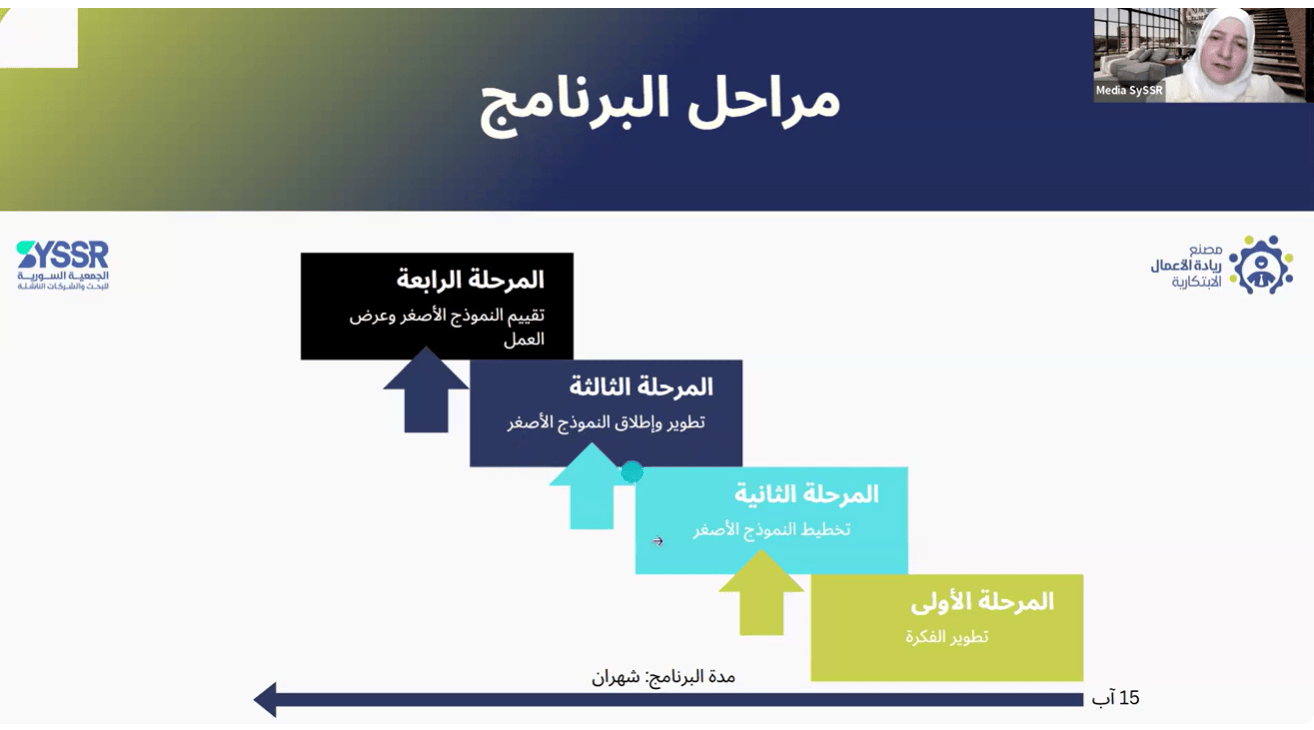
The program was built as a four-stage journey over two months.
Stage 1: Developing the Startup Idea
The first stage focused on helping teams understand what a startup is, what a social venture is, and how strong startup ideas are generated and evaluated. Teams were encouraged to search for real problems, study social needs, examine examples of startups and social ventures, and clarify the relationship between problem, solution, and vision.
Stage 2: Planning and Developing the MVP
The second stage focused on the relationship between the customer, the value proposition, and the product. Teams worked on understanding users, identifying product features, using the value proposition canvas, and planning the minimum viable product.
Stage 3: Developing and Launching the MVP
The third stage focused on launching the MVP and improving it through feedback. Teams explored launch strategies, early users, repeated launch, product iteration, development cycles, and product-market fit.
Stage 4: Evaluating the MVP and Preparing the Startup Pitch
The fourth stage focused on evaluating the MVP and preparing a startup presentation. Teams learned how to organize their pitch, select the most important ideas, communicate clearly, update their business model, and prepare for a final Demo Day-style presentation.
Session 1: From Idea to Startup Opportunity
The first session introduced participants to the meaning of startups and social ventures. It helped teams distinguish between small businesses, medium-sized businesses, large companies, startups, and social ventures.
The session presented the startup as a newly established venture built around an innovative idea, a new solution, or a new product or service. It also emphasized that startups are expected to grow quickly, serve increasing numbers of users, and work under conditions of limited resources.
The session also introduced the idea of the social venture. A social venture was presented as an organization that may be profit-oriented or semi-profit-oriented, but whose primary aim is to create positive social or environmental impact. This helped participants think beyond the narrow idea of profit and consider how business models can also serve social value.
The session then moved into idea generation. Teams were encouraged to search for real problems, examine social needs, expand their perspective, use brainstorming and design-thinking methods, test ideas quickly, request objective feedback, and evaluate feasibility and sustainability.
Main learning areas
- What makes a startup different from other types of companies
- What makes a venture socially oriented
- How to identify urgent problems
- How to connect social needs with startup ideas
- How to generate and evaluate startup ideas
- How to define a problem-solution-vision hypothesis
- How to begin thinking about the business model of the organization
Session 2: From Problem to MVP Plan
The second session focused on moving from the startup idea to the MVP plan.
The session introduced a simple but powerful relationship:
Customer ⇐ Value Proposition ⇒ Product
This relationship helped teams understand that the startup does not begin with the product alone. It begins with a customer or user, a problem or need, and a value proposition that connects the solution to the user’s life.
The session used well-known companies such as IKEA, Facebook, and Apple as examples to help participants ask practical questions:
Who are the customers?
What products or services are offered?
What problems are solved for customers?
What benefits do customers receive?
What value does the company provide?
The session then introduced the business model canvas. Teams examined customer segments, channels, customer relationships, the value proposition, key activities, key partners, key resources, revenue streams, and cost structure. This helped participants see the startup as an integrated system for producing and delivering value.
A major part of the session focused on speaking with users. Teams explored how to conduct user conversations, what mistakes to avoid, and how to ask questions that reveal real problems rather than only opinions about the idea.
The session also introduced MVP planning. Teams were guided to define the first limited set of product or service features, connect these features to customer needs, and avoid falling in love with the first version of the product.
Main learning areas
- Customer, value proposition, and product
- Business model canvas
- Customer segments and channels
- Revenue streams and cost structure
- User interviews
- Common mistakes when speaking with users
- MVP planning
- Defining limited early product features
- Connecting features with value
Session 3: From MVP to Launch and Learning
The third session focused on launching the MVP and improving it through real user feedback.
The session treated launch not as a single event but as a repeated process. Teams discussed different forms of launch, including simple launch, launch to friends and family, and initial launch to customers and users. They also examined how to collect early feedback, reach first users, and build bridges toward wider user access.
The session introduced the idea that early startups should launch, learn, and improve repeatedly. Participants were encouraged to put the product or solution in the hands of early users and then use feedback to improve the product.
The session also introduced product development cycles. Teams explored how to define the length of a development cycle, identify a product lead, organize brainstorming, build agreement, review success measures, work during the development cycle, and evaluate the results.
Agile methodology and the Scrum framework were presented as professional references for managing product development cycles.
A key part of the session focused on product-market fit. Teams discussed how to know whether users strongly want the product and how feedback from users can guide the next stage of product development.
Main learning areas
- Launch as a repeated process
- Simple launch and early-user launch
- Friends-and-family launch
- Early feedback and first users
- Landing pages and calls to action
- Product development cycles
- Agile and Scrum as references
- Iteration and improvement
- Product-market fit
- Learning from user behavior and feedback
Session 4: From Startup Progress to Investor-Ready Pitch
The fourth session focused on evaluating startup progress and preparing a clear startup presentation.
The session showed that a startup pitch is not only for investors. It can also be directed toward customers, potential partners, employees, mentors, community institutions, and supporters. This helped teams understand that presenting the startup is part of building the startup’s public identity.
Participants learned how to design a better pitch by selecting only the most important ideas. The session emphasized that strong pitch slides should be clear, simple, and understandable from one look.
The session also introduced the main components of a startup pitch deck. These included the company name and mission, the problem, the solution and its practical benefits, growth or progress, product features, business model, market growth, the team, and the funding request.
The final part of the session connected presentation with implementation. Teams were asked to update their business model, provide new information about customers and products, explain possible pivots, prepare a Demo Day presentation, and record a personal startup pitch video.
Main learning areas
- Startup presentation as communication with multiple audiences
- Pitch design
- Selecting 5–7 core ideas
- Clear, simple, and direct slides
- Problem, solution, growth, and product features
- Business model and market growth
- Team and funding request
- Demo Day preparation
- Recorded startup pitch video
- Updating the startup story based on learning
Training Methodology
The Innovative Entrepreneurship Lab was designed as a blended entrepreneurship learning journey, not only as a lecture series.
The program combined several learning components:
- Weekly lectures and articles
- Group sessions
- Consulting sessions
- A Telegram study group
- Google Classroom tasks
- Team outputs
- Final pitch preparation
This design helped participants move from listening to doing. The sessions introduced frameworks and examples, while the assignments required teams to apply the concepts to their own startup ideas.
Participants were asked to produce practical outputs across the program, including:
- A one-minute video explaining the startup idea
- Written reflections on how their startup or social venture could change the world
- Analysis of social benefits
- Reports on customer segments and value propositions
- Reports on product details and feature-level value
- Updated business model canvases
- Reports on launch results and user feedback
- Reflections on possible pivots
- Final pitch materials
- A recorded startup pitch video
This practical methodology reflects the Power Plus belief that effective training should lead to clearer decisions, stronger structures, and concrete next steps.
Participating Teams
The program worked with a group of startup-building teams developing different business and social venture ideas.
Participating teams included in 2025:
- FitCode Platform
- Rafiqi Educational Platform
- Economy of Ideas
- AnalySense
- IVY Medical Platform
- Juz’ Platform for Drug Development
- Najahi Educational Platform
- Salim Transport Platform
- YPR Team
- A Real Estate Platform
- Nada Interactive Children’s Platform
The variety of teams made the program richer. It allowed participants to learn not only from the trainer and mentors, but also from the different challenges, ideas, and sectors represented by other teams.
Value Created
The Innovative Entrepreneurship Lab helped participating teams move through a structured startup-building process.
Through the program, teams were supported to:
- Clarify their startup or social venture ideas
- Understand the difference between a startup, a small business, and a social venture
- Identify meaningful problems and social needs
- Define customers, users, and beneficiaries
- Build clearer value propositions
- Analyze their business models
- Plan MVP features
- Speak with users and collect early feedback
- Launch early versions of their products or services
- Improve products through iteration
- Understand product-market fit
- Update their assumptions based on learning
- Prepare stronger startup presentations
- Communicate with mentors, partners, supporters, and potential investors
The main value of the program was helping teams understand that entrepreneurship is not only about having an idea. It is about building a disciplined path from idea to evidence, from evidence to product, and from product to a sustainable organization.
Why This Case Matters
This case demonstrates how Power Plus can support entrepreneurship programs at several levels.
First, Power Plus can design a complete learning journey, not only deliver individual training sessions. The Innovative Entrepreneurship Lab was structured as a two-month pathway with stages, assignments, readings, consulting support, and final presentation outputs.
Second, Power Plus can support both business startups and social ventures. The program connected commercial thinking with social purpose, helping teams think about economic value, social value, sustainability, and impact.
Third, Power Plus can translate startup knowledge into practical tools for early-stage teams. Concepts such as the business model canvas, value proposition, MVP, user interviews, launch, iteration, product-market fit, and pitch design were connected to practical tasks and team outputs.
Finally, the case reflects the integrated Power Plus approach. Startup success requires more than inspiration. It requires strategy, business modeling, operations, customer understanding, product development, communication, mentoring, and disciplined follow-up.
Power Plus helps teams connect these elements and use them to make better decisions.
Recordings
The four training sessions were recorded and are available through the program playlist:
The recordings are embedded here to show the content, style, and practical orientation of the training.
Training Materials
The program was supported by structured slide decks, readings, exercises, and assignments. These materials covered idea development, startup and social venture models, business model design, MVP planning, user interviews, launch, product iteration, product-market fit, and pitch preparation.
Download the slides from this link.
Call to Action
Power Plus provides customized training, mentoring, and consulting programs for incubators, nonprofit organizations, startup programs, SMEs, and social-purpose organizations.
If your organization supports entrepreneurs or early-stage teams, Power Plus can design and deliver a practical entrepreneurship program that helps participants move from ideas to validated opportunities, MVPs, launch, learning, and pitch readiness.
Contact Power Plus to design a customized startup-building program for your teams